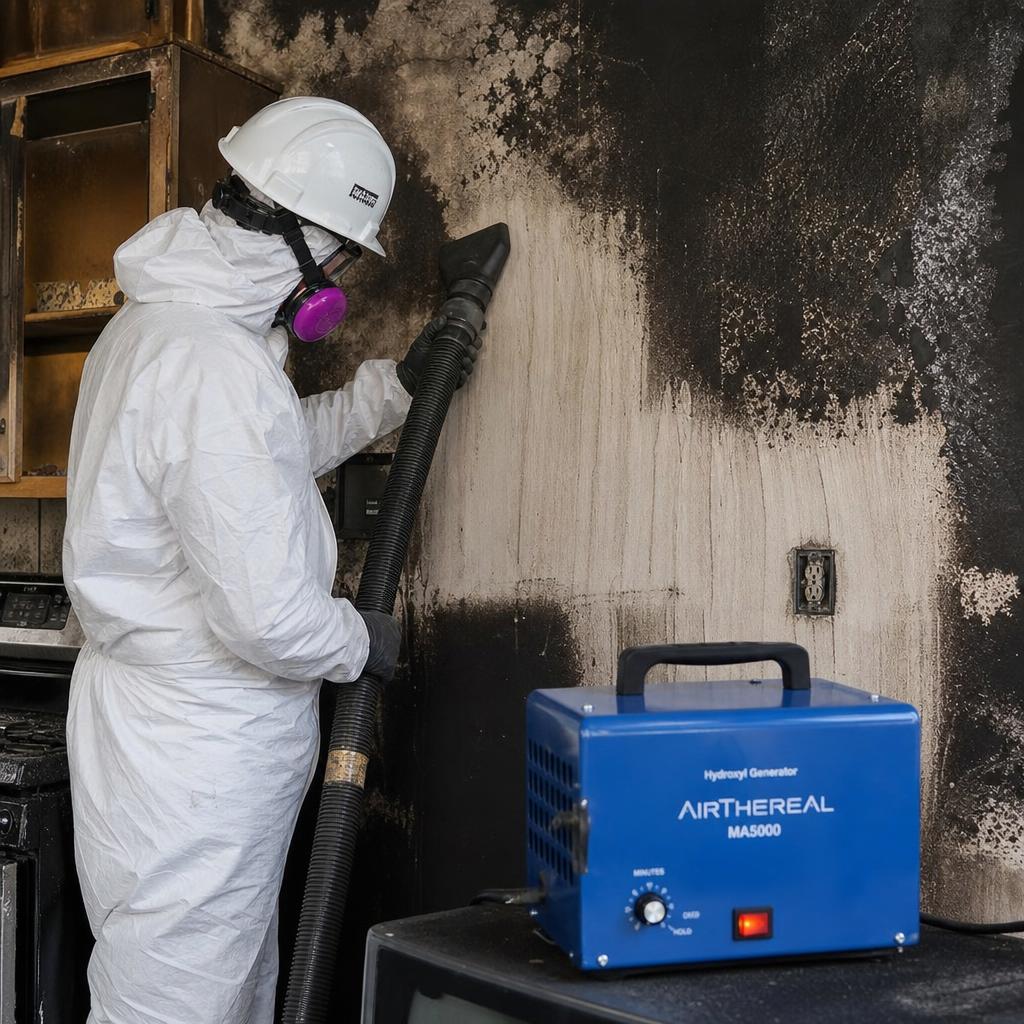
Immediate Mitigation Requires Expertise
Fire damage almost always brings water damage from suppression efforts. We clean soot and smoke residue, eliminate odor at the source, and dry out any water used to fight the fire.
Service Response Note
Odor elimination verified before we close out a job.
What We Do
- Soot and smoke residue removal
- Thermal fogging and ozone odor treatment
- Water extraction from fire suppression
- Content cleaning and pack-out coordination
Understanding Fire & Smoke Damage
A fire is rarely the only thing you're recovering from. Fire department suppression efforts routinely leave a home soaked, and the combination of soot, smoke residue, and water creates a chemically corrosive environment that keeps damaging surfaces long after the flames are out. Soot is acidic and can etch metal and glass within days, while smoke odor works its way deep into porous materials like drywall, insulation, and fabric — which is why fire restoration has to address both the fire damage and the water damage from the response effort, not just one or the other.
We begin with a structural and contents assessment to understand the extent of both fire and water impact, then move quickly into water extraction from suppression runoff before it causes a second wave of damage. Soot and smoke residue are removed from walls, ceilings, and hard surfaces using techniques matched to the surface type, since aggressive cleaning can grind soot in deeper on some materials. For lingering odor, we use thermal fogging and ozone treatment to neutralize smoke odor at the molecular level rather than covering it up. Salvageable contents are cleaned, deodorized, and coordinated through pack-out and storage while structural repairs proceed.
The type of fire matters for how we approach cleanup. A contained kitchen fire produces different residue and odor patterns than a fire that spread through wall cavities or attic space, and protein-based smoke from a cooking fire behaves differently on surfaces than the drier soot from a structural wood fire. We adjust cleaning agents and techniques accordingly rather than running one standard process on every job. We also move fast on suppression water specifically, since a fire-damaged structure sitting wet for even a day or two on top of heat and soot exposure creates ideal conditions for mold to take hold in already-compromised materials.
Fire and Smoke Recovery Beyond the Burned Area
Fire damage extends beyond the charred materials that are easiest to see. Smoke residue can move through a home, office, restaurant, or warehouse on air currents, while suppression water can affect rooms far from the original fire. Different fuels leave different residue patterns, and porous contents may hold odor even after walls and ceilings have been cleaned. Our assessment considers the structure, contents, HVAC pathways, and water impact together so the cleanup plan addresses the whole loss.
For businesses, the order of work matters because a partial reopening may be possible if unaffected areas are separated from the restoration zone. For homeowners, a documented pack-out can protect salvageable belongings while damaged rooms are cleaned and rebuilt. We coordinate extraction, soot removal, deodorization, contents cleaning, and drying as one project, keeping the records an adjuster needs and identifying when an electrician, roofer, or licensed contractor must complete a safety-related repair before cleaning can continue.
As an IICRC-certified firm, we follow strict industry guidelines for all our procedures. Whether the damage is confined to a single room or has affected multiple floors, our technicians arrive equipped to handle the full scope of mitigation.
We document every step of the process. From the initial moisture mapping to the daily drying logs, we provide the comprehensive documentation required to verify the structure is dry and to support your insurance claim.