Immediate Mitigation Requires Expertise
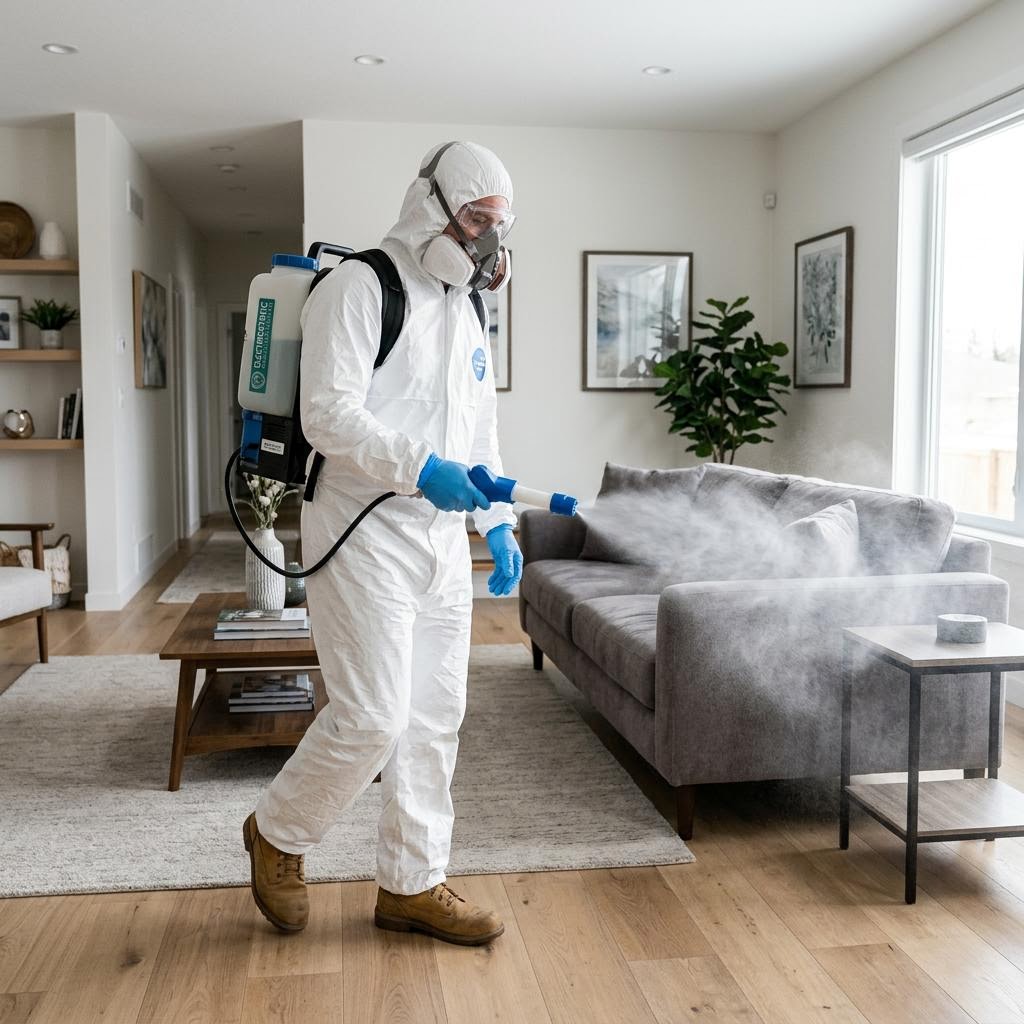
Drying a structure doesn't guarantee it's sanitary. We apply EPA-registered antimicrobial treatments to affected surfaces and HVAC systems so your property is safe to reoccupy, not just visibly clean.
Service Response Note
Electrostatic application reaches surfaces manual wiping misses.
What We Do
- EPA-registered antimicrobial and disinfecting agents
- Electrostatic spray application for even surface coverage
- HVAC and air handler sanitizing after contamination events
- Documentation for health-safe reoccupancy
Understanding Sanitizing & Disinfection
Water damage, sewage backups, and mold growth all leave behind more than visible mess — they leave bacteria, mold spores, and other microorganisms on surfaces throughout the affected area, including places that never got directly wet. A room can look completely dry and still carry a level of contamination that makes it unsafe to fully reoccupy, especially for households with young children, elderly residents, or anyone with respiratory sensitivities.
We treat affected surfaces with EPA-registered antimicrobial and disinfecting agents matched to the type of contamination involved, whether that's Category 3 sewage exposure, mold-related biocide treatment, or general post-flood sanitizing. Electrostatic sprayers wrap disinfectant evenly around irregular surfaces — door frames, textured walls, equipment — in a way manual wiping consistently misses. When contamination has circulated through the home's air system, we also sanitize HVAC components and air handlers to stop recontamination through the ductwork. The result is documented, so you have a clear record that the space was treated to a health-safe standard before your family or employees return.
This service is used most often as the final step of a larger job, but it also stands on its own for situations that don't involve major structural drying — think a basement-level flood in a commercial building after hours, a short-term rental that had a plumbing failure between guests, or a daycare or medical office that needs documented sanitization after any contamination event before reopening to the public. Commercial clients in particular tend to need the paper trail as much as the treatment itself, since insurers, franchise requirements, or health inspectors may ask for proof that a space was professionally disinfected, not just cleaned, before it reopens.
Sanitization for Homes, Workplaces, and Public-Facing Spaces
Professional sanitization is useful anywhere a water or contamination event can affect people who need to return quickly. Homes may need treatment after a sewage backup or flood, while offices, clinics, schools, restaurants, gyms, and rental properties may need a documented cleaning process before employees, customers, students, or guests come back. We identify the type of contamination first, then select products and application methods appropriate for the surfaces and the re-entry requirements.
The work can include hard-surface disinfection, antimicrobial treatment, odor control, and HVAC or air-handler attention when contaminated air has circulated through the building. Electrostatic application helps reach irregular surfaces, but it does not replace source removal or structural drying; those steps remain essential when moisture is still present. We explain the products used, any waiting period, and the areas treated so property managers have a practical handoff record for staff, tenants, insurers, or health and safety reviewers.
As an IICRC-certified firm, we follow strict industry guidelines for all our procedures. Whether the damage is confined to a single room or has affected multiple floors, our technicians arrive equipped to handle the full scope of mitigation.
We document every step of the process. From the initial moisture mapping to the daily drying logs, we provide the comprehensive documentation required to verify the structure is dry and to support your insurance claim.