Immediate Mitigation Requires Expertise
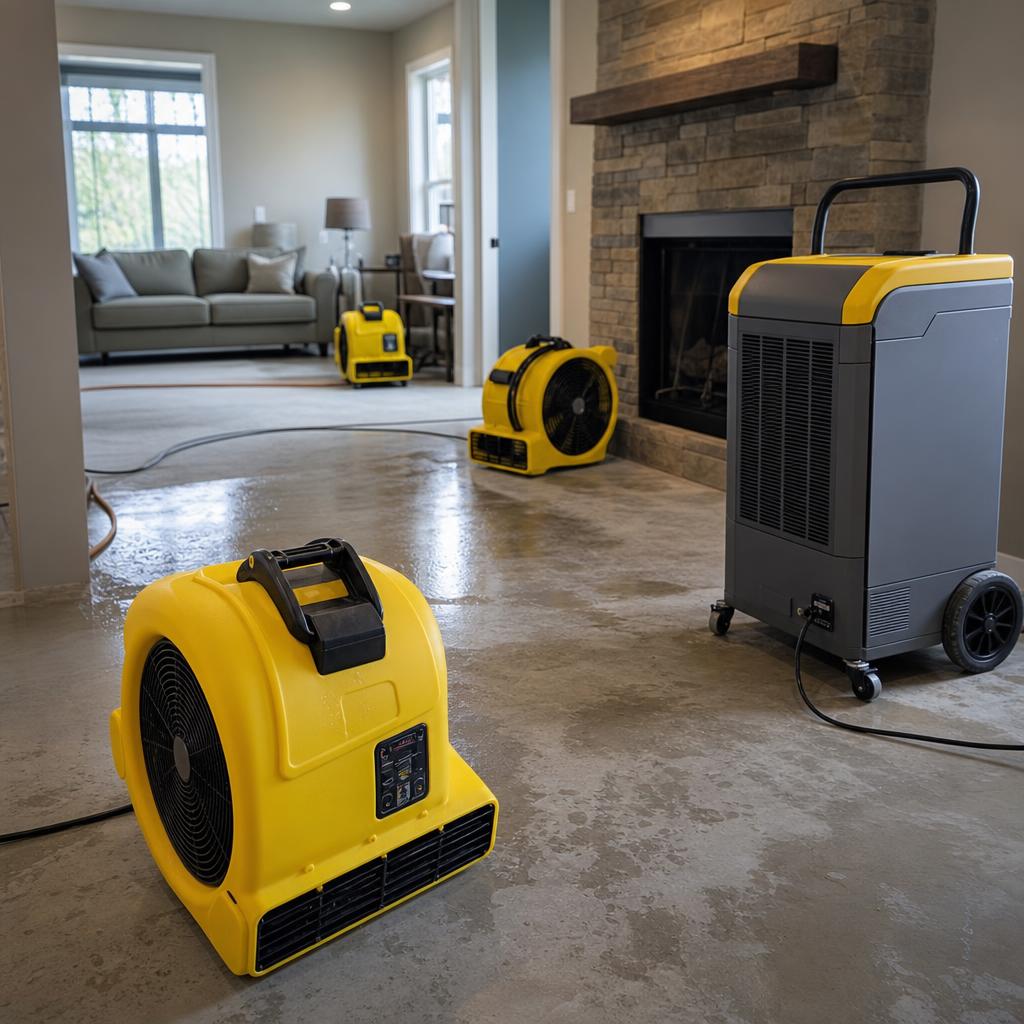
Removing water is only half the job. We deploy industrial air movers and desiccant dehumidifiers, then track moisture content daily until your structure is verified dry.
Service Response Note
Daily moisture logs shared with you and your insurer.
What We Do
- Industrial-grade air movers and LGR dehumidifiers
- Thermal imaging to locate trapped moisture
- Daily documented moisture readings
- Drying goals set to IICRC S500 standards
Understanding Structural Drying
Pulling standing water off the floor only solves part of the problem. Wood framing, drywall, and insulation can hold onto moisture long after the surface looks dry, and Houston's ambient humidity works against you the entire time, slowing natural evaporation and giving mold a head start. Structural drying is the science of forcing that trapped moisture out of building materials and into the air, where it can be captured and removed before it causes warping, delamination, or microbial growth.
We set up a calculated drying system for each affected room using industrial-grade air movers positioned to create continuous airflow across wet surfaces, paired with low-grain-refrigerant (LGR) dehumidifiers sized to the room's volume and moisture load. Thermal imaging cameras help us confirm exactly which areas behind walls and under flooring still need attention, so equipment isn't left running blindly. Every day we return to take documented moisture readings with calibrated meters and compare them against dry-standard benchmarks for the specific materials involved, sharing those logs with you and your insurance adjuster until the structure is verified dry to IICRC S500 standards.
Stopping the equipment too early is one of the most common mistakes in DIY drying attempts, and it's usually invisible until mold shows up weeks later. A room can feel dry to the touch while the framing behind the drywall or the subfloor beneath the tile still holds enough moisture to sustain mold growth. That's why we don't rely on how a space feels or looks — we pull equipment only when instrument readings on the actual affected materials hit dry-standard, not just when the air in the room feels comfortable again. On larger jobs spanning multiple rooms or floors, we also sequence equipment placement so we're not just drying the loudest complaint first, but addressing the areas most likely to develop hidden secondary damage if left for last.
Structural Drying That Protects the Building
Residential and commercial buildings each present different drying challenges. Homes may have carpet, hardwood, cabinets, and enclosed wall cavities that hold moisture out of sight. Offices, warehouses, schools, and apartment buildings add larger floor plans, shared walls, elevators, mechanical rooms, and occupied areas that must stay accessible. We map those conditions before placing equipment, then create drying zones that move moisture out efficiently without sending it into an unaffected part of the building.
Owners receive a clear record of the drying process, including equipment placement, daily moisture readings, and the point at which materials reach an appropriate dry standard. That documentation is useful for an insurance claim, but it also protects the property long after the emergency is over by showing that the structure was not closed up while hidden moisture remained. When readings stop improving, we investigate the reason rather than simply leaving equipment running: trapped moisture, a continuing leak, or high indoor humidity may require a different solution.
As an IICRC-certified firm, we follow strict industry guidelines for all our procedures. Whether the damage is confined to a single room or has affected multiple floors, our technicians arrive equipped to handle the full scope of mitigation.
We document every step of the process. From the initial moisture mapping to the daily drying logs, we provide the comprehensive documentation required to verify the structure is dry and to support your insurance claim.